 Tech Trends Daily

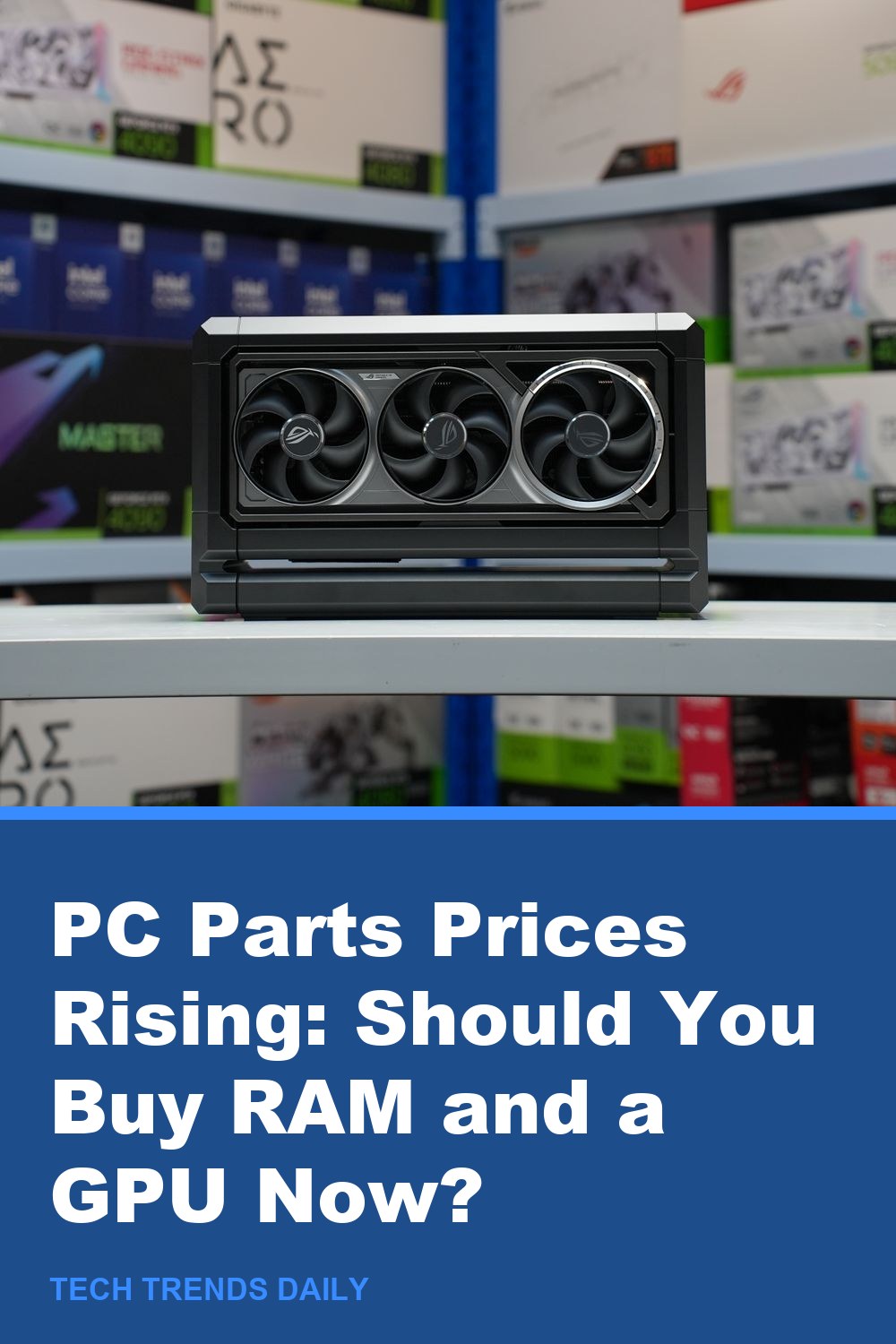

Nvidia is raising prices on its RTX 50 graphics cards again, with the flagship RTX 5090 climbing by roughly $500, according to ZDNET. Memory is no better: AI data centers keep absorbing RAM supply, and the shortage may last well beyond this year. If you are planning a PC build or upgrade, the sensible move is to work out what you actually need and compare real prices now, rather than assuming the market will cool off on its own.
What is happening to GPU prices
ZDNET reports that Nvidia has told customers its RTX 50 series will get another significant price increase this week. This follows a warning in August that the whole RTX 50 line would rise by up to 15%.
The top of the range takes the biggest hit. The RTX 5090 is going up by nearly $500 on a price ZDNET lists as about $6,000 at Best Buy. Entry-level cards are affected far less in dollar terms: ZDNET describes the RTX 5050 increase as annoying but manageable, in the range of $30 to $60, and the RTX 5060 sits in a similar bracket.
Two details matter for shoppers. First, older RTX 40 and RTX 30 cards are not directly affected by Nvidia's decision. Second, ZDNET warns that some resellers may add their own markups, or buy up stock to resell at higher prices on the second-hand market. So "not directly affected" does not guarantee a bargain.
AMD and Intel: a pause, not a promise
According to ZDNET, neither AMD nor Intel has announced plans to change graphics card prices in response. Both have stayed quiet on the subject. ZDNET's view is that this may not last, because companies are tying up the raw materials used for AI chips and committing hardware to future AI data centers instead of the consumer market.
That is a forecast, not a confirmed price change. For a buyer, it means the alternatives to Nvidia are worth pricing today, but their current prices may not stay put.
Why RAM is the bigger long-term worry
The Verge reports that AI data centers have been buying up the world's RAM supply, which is driving shortages and price hikes across tech. Intel expects the shortage to last through at least next year, and SK Hynix has said it could drag on until 2030.
Tom's Guide describes the past year as "RAMageddon", with RAM prices rising by hundreds of dollars and industry leaders warning that relief might not come until 2028.
Is relief on the way? The optimistic case and the catch
Tom's Guide, in an opinion piece by managing editor Jason England, makes a hopeful argument. Citing a Bloomberg report, it says the results of the 2026 US midterms could put about 50% of proposed data centers under more scrutiny and pushback. If tech giants struggle to get permits and power for new server farms, the thinking goes, they would buy less silicon, and chipmakers might shift more production back to consumer GPUs and DDR5 memory.
The same piece then argues against itself. AMD reported a 45% year-over-year revenue jump for its third quarter, driven by 97% data center growth. That suggests cloud customers are still spending heavily. Tom's Guide concludes that 2027 will probably still be a rough year for PC builders, though it hopes more regulation could eventually help.
Sam Altman, OpenAI's CEO, added to the conversation. After telling the Cheeky Pint podcast that it is "quite terrible" for a lot of the world's limited DRAM to sit in personal computers used only five percent of the time, he renamed his X account "Ram Altman" and said he wants people to be able to put as much memory as they like in their machines. He said he has long argued for higher memory production. Nice sentiment, but it does not change what is on store shelves today.
The honest summary: there are plausible reasons for prices to ease eventually, and strong reasons to think they will not do so soon. Nobody can tell you the date, so build your plan around your own needs rather than a guess.
What the reported figures mean at a glance
| Item | What has been reported | Reported by | What it means for buyers |
|---|---|---|---|
| RTX 5090 | Increase of nearly $500 on a roughly $6,000 listing at Best Buy | ZDNET | Hard to justify unless your work truly needs it |
| RTX 5050 / 5060 | Increases of roughly $30 to $60 | ZDNET | Smaller jump; price against alternatives before buying |
| RTX 40 and 30 series | Not directly affected, but resellers may mark up | ZDNET | Check seller reputation and compare against new-card prices |
| AMD and Intel graphics cards | No immediate price changes planned; hikes may follow later | ZDNET | Worth pricing now, but do not assume the gap lasts |
| RAM | Shortage expected through at least next year (Intel); possibly until 2030 (SK Hynix) | The Verge | Do not count on a quick drop |
| Data center demand | AMD Q3 revenue up 45%, data center growth 97% | Tom's Guide | Demand for chips remains strong; 2027 may still be tough |
What this means for you: a practical checklist
You cannot control component prices, but you can avoid paying for things you do not need. Work through these steps before you spend anything.
- Define the job. Write down what the PC must do: everyday work, 1080p gaming, video editing, or something heavier. The RTX 5090's price tag makes sense for very few people. A mid-range or entry-level card may cover your needs at a far smaller increase.
- Ask whether you need to buy at all. If your current PC does what you need, a single targeted upgrade, such as a storage drive or a modest memory top-up, may be wiser than a full rebuild.
- Price the whole build, not one part. With both GPUs and RAM climbing, the total matters more than any single bargain. Compare complete lists at two or three retailers.
- Look beyond Nvidia. AMD and Intel have announced no price changes yet. If their cards meet your needs, compare them now, while that is still true.
- Consider older generations carefully. RTX 40 and 30 cards are not directly affected, but watch for reseller markups and be cautious with second-hand listings.
- Set a budget ceiling and a deadline. If prices stay above your limit, pause the project. If they fit, buy and stop checking daily. Chasing a possible drop is risky when industry forecasts point to a long shortage.
- Buy the memory you need, not the maximum. Pick a capacity that suits your actual tasks rather than overspending on headroom you may never use.
The one case for waiting is simple: if your current machine works fine, there is no cost to holding off. If it does not, delaying could cost you more than it saves.
FAQ
Will RAM prices go down in 2026 or 2027?
Nobody can say for certain. According to The Verge, Intel expects the shortage to last through at least next year, and SK Hynix has said it could continue until 2030. Tom's Guide thinks 2027 will still be difficult for PC builders, even though it hopes tighter rules on data centers could help over time.
Are older Nvidia RTX 40 and 30 cards a safer buy?
They are not directly affected by Nvidia's latest increase, according to ZDNET. However, resellers may raise prices or buy stock to resell at a markup, so compare prices and check the seller before buying, especially second-hand.
Should I switch to an AMD or Intel graphics card?
It is worth comparing them. ZDNET reports that neither company has announced immediate price changes, though it expects increases may follow eventually. Choose based on the games or software you use, and check current prices rather than relying on the idea that they will stay lower.
Sources
- ZDNET: Nvidia RTX 50 GPUs hit with more price hikes – up to $500
- Tom's Guide: Sam Altman just renamed himself ‘Ram Altman’ in U.S. Midterms aftermath — the panic is setting in, but is the AI bubble starting to crack?
- The Verge – AI: Sam Altman addresses RAM comments: People should ‘put as much as they want in their computers’
Photo: Gabriel Lopez / Pexels

I'm an Italian creator who builds apps, games and websites. I run Tech Trends Daily with the help of AI tools: every article starts from the sources linked above, and I check what goes out. I'm not a doctor, a lawyer or a financial adviser. Spotted a mistake or have an idea? Write to me.
Instagram @spartaco_94_My websiteWrite to meAbout this blog










 Simulated Lives: Are We Already Living in a Matrix?
 The Physics of Space Travel: Exploring Faster-Than-Light Travel
 Speed Reading: The 3-Book Bundle





